Nikolai Panin was the first Russian Gold Medalist. His life offers a window into sporting life at the turn of the century and the success of Russian athletes in winter sports.
1. The Life of Nikolai Panin
Many of the connections between Winter Sport and Russian athletic success can be made through understanding Panin’s life experience.1
1871: Born in Voronezh, Southwestern Russia to parents of no notable status. His name was Kolomenkin by birth, adopting Panin as a stage name later on
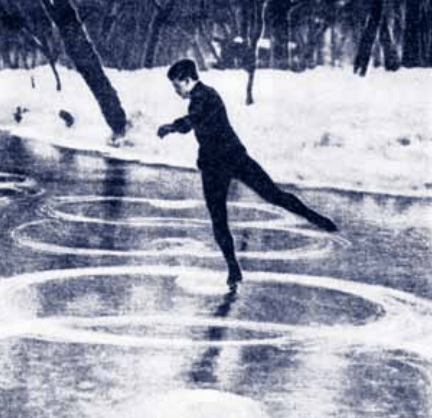
Before 1885: Panin received a pair of skates from his mother. According to Panin’s account, his family was so poor that after the 500km treck, he and his sister supposedly shared the skates by each learning on one foot. 2 While a dubious story, Panin indeed skated on his left leg when performing difficult figures, something which was otherwise uncommon.
1895-1896: After moving to St. Petersbrug, Panin begins skating at the Yusupov gardens, home to a blooming competitive ice sports scene, the St. Petersburg Yacht Club’s winter sports section, and home ice to Alexander Panshin, the best Russian skater of the late 19th century.
1903-4: First Real International Competition. Panin places runner up to Max Bohatsch of Austria, becomes a top-4 contender by mid 1904
1908: Panin competes in the Olympics. After withdrawing from the first event due to a dispute with Ulrich Salchow, he wins the Special Figures event later the same day
1917: Sidelined as the head of the Russian sports movement due to his inability to focus on sport as a workers’ pursuit
Winter 1941: Evacuated from Leningrad in the face of the advancing German army, later put in charge of the Lesgaft Institute of Physical Culture
1956: Death in Leningrad after 10 years of work as director in Lesgaft
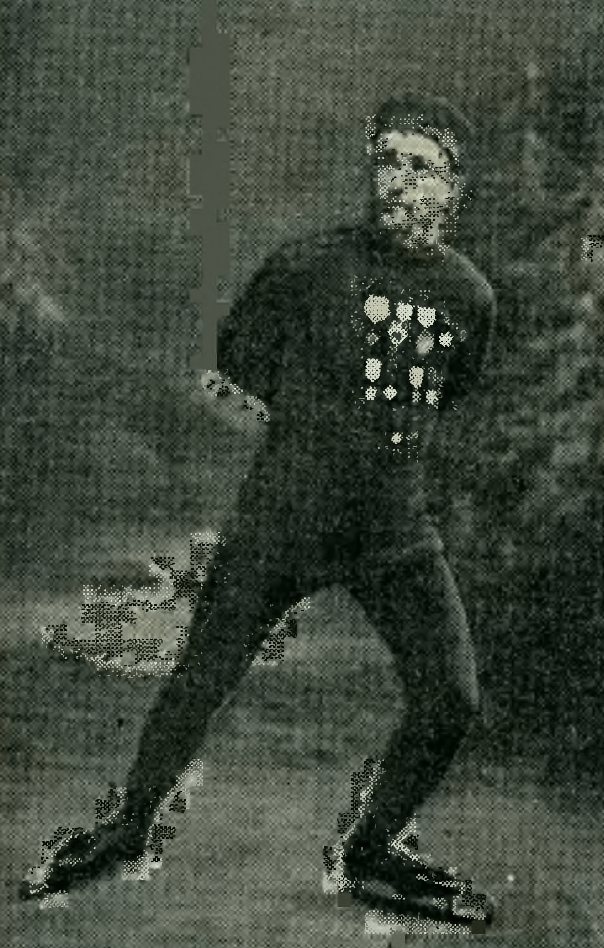
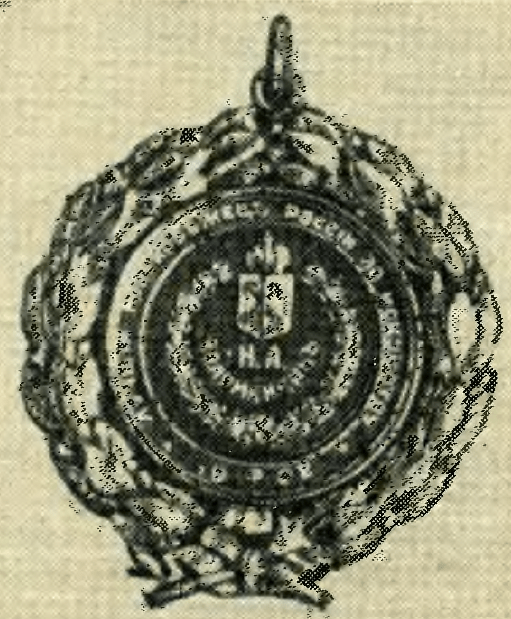
Source: 3A. Panshin in 1889 4Gold Medal for the Russian National Champion (1903)5
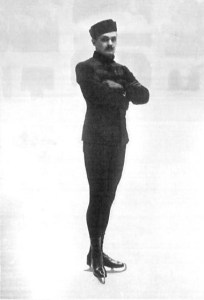
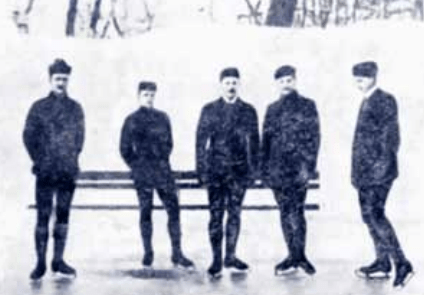
Photo of Ulrich Sachow (Left), Panin (Second from Left)6
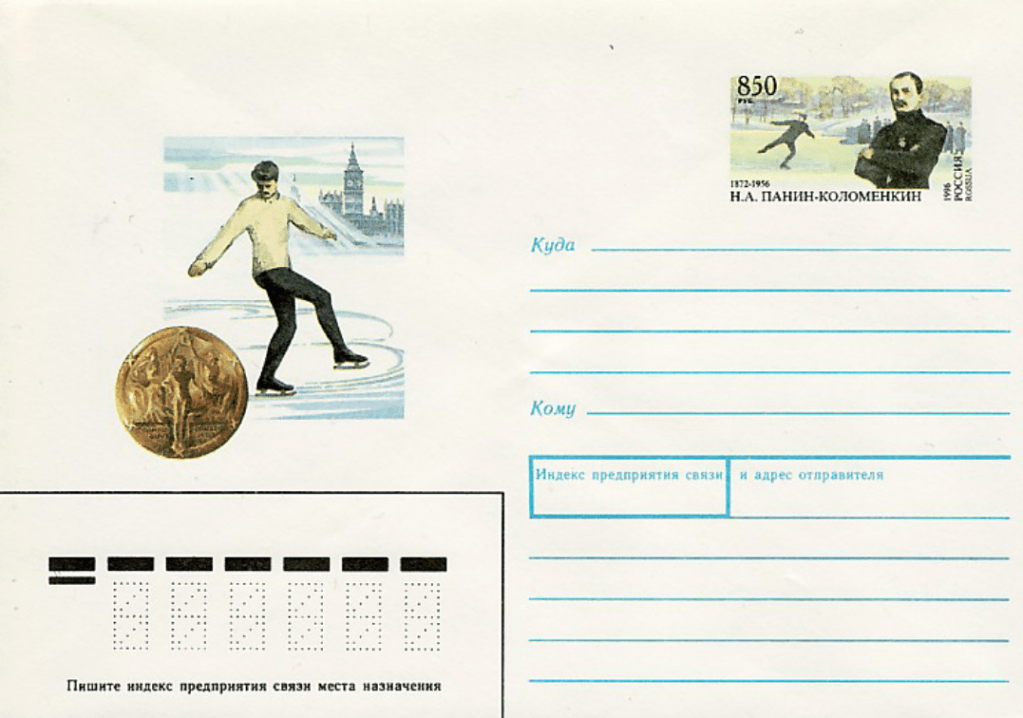
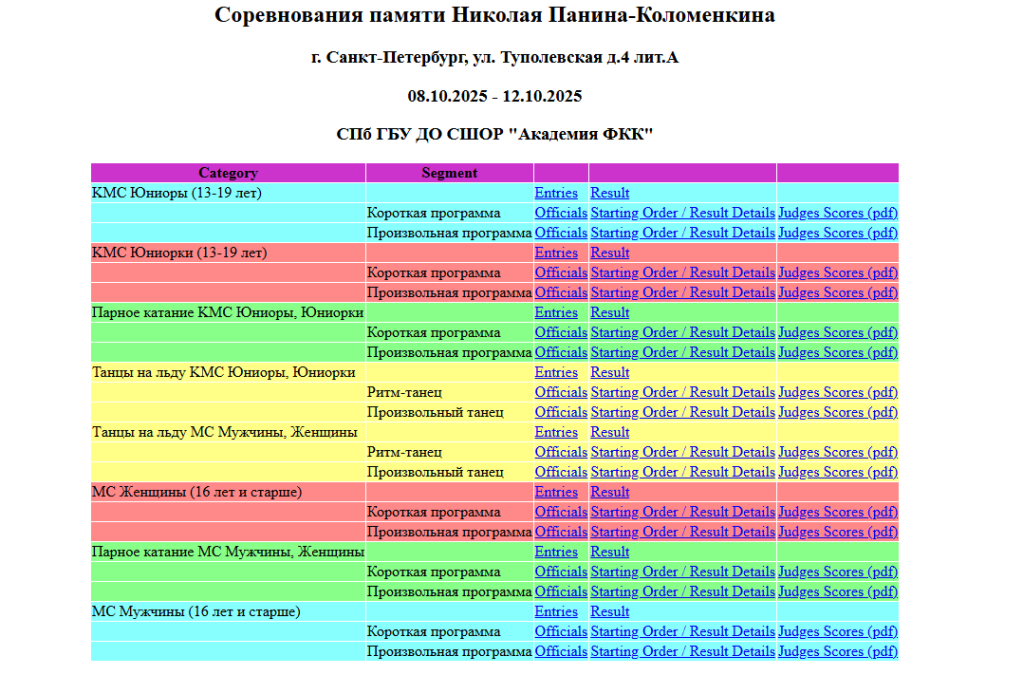
Postcard in Honor of Panin 7Internet results page for the 2025 Nikolai Panin-Kolomenkin Memorial Competition
2. Sporting Culture
Panin’s success was made possible by its intersection with cultural practices and institutions which set him apart from international competition.
Skating to School
Russian schoolchildren during this period could often count on skating to school if there was a canal that froze over in the winter or just simply enough snow on the ground
Panin’s autobiography, pg. 8
Smaller Russian cities thus represented a rare opportunity for children to grow up alongside the sport.
Ibid. pg, 10
It was this focus on skating during break time which provided the link to competitive sports. Russian schools could function as collective spaces of sport and play during the winter, inspiring some to look for the next level.
The Yusupov Garden
The main Russian cities like St. Petersburg provided state of the art rinks for all. Founded in the 18th century by the Yusupov Princes, the Yusupov gardens were comprised of an outer ring of gardens, a lake, and three islands in the middle. Because the Russian winter was so long and cold in the north, the St. Petersburg Yacht Club surrendered its space to public skating for much of the year. Therefore, the Russian climate and city layouts provided the best and most comprehensive location for competitive skating.
Panin attended the Yusupov gardens starting in the 1880s, and continued to train there for the duration of his career. The Russian geographical context and climate proved best for practicing throughout the year.8
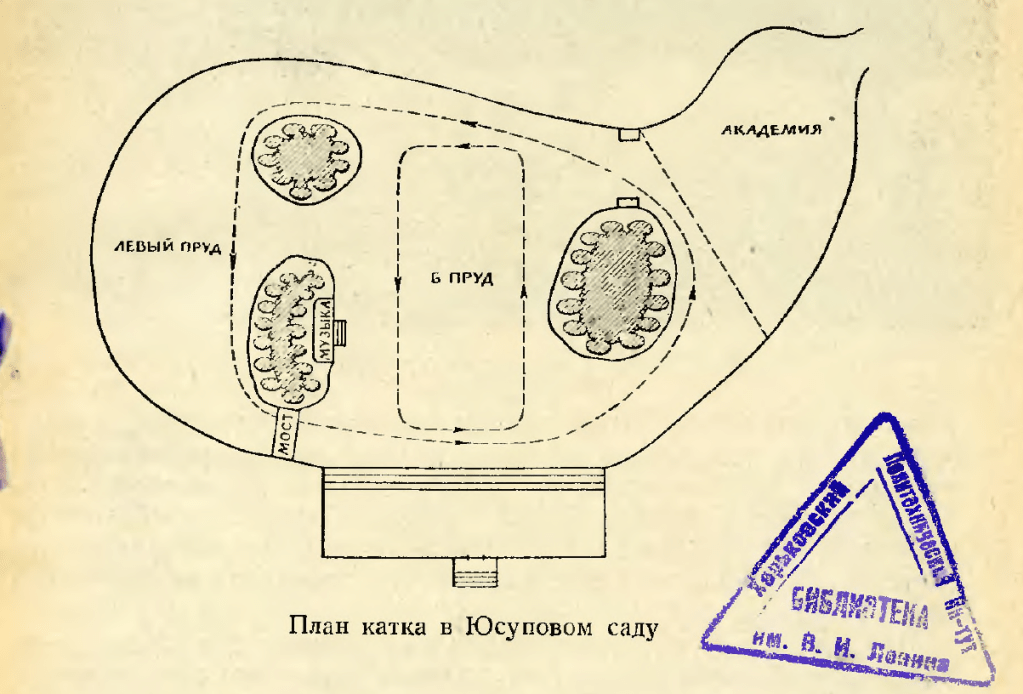
Panin’s sketch shows the skating path around and in between the three main islands. The large lake offered one of the best skating experiences in Europe
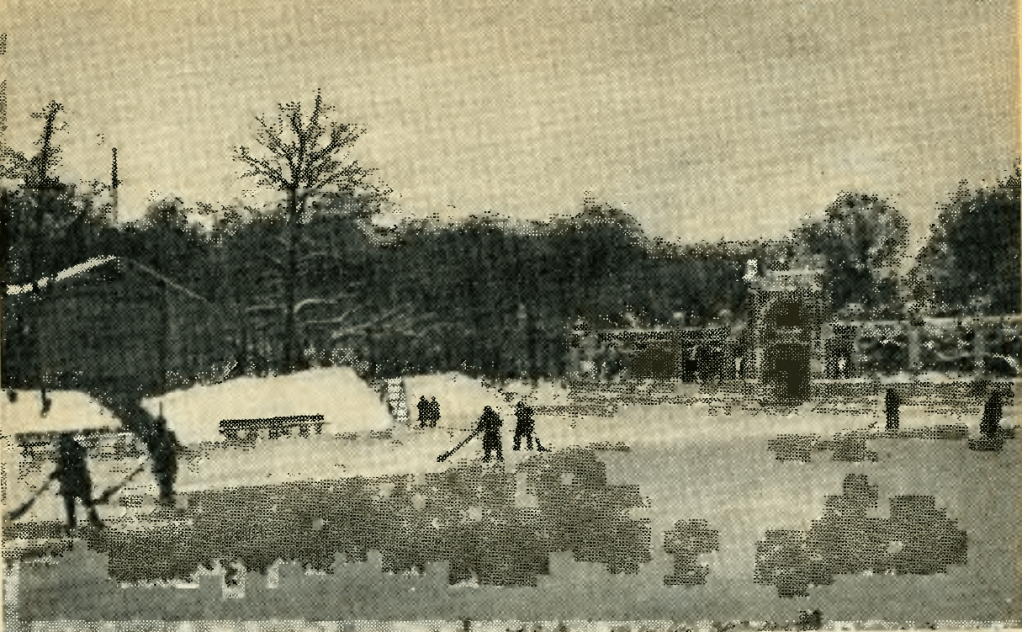
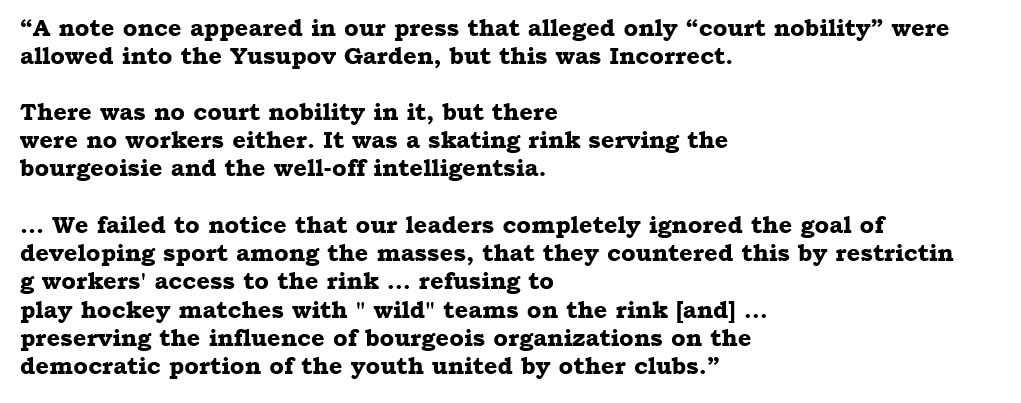
This picture of the gardens shows its multipurpose use as a hockey rink. Panin noted that hockey playing was heavily limited because it did not conform to the borgeioise ideal of the garden itself
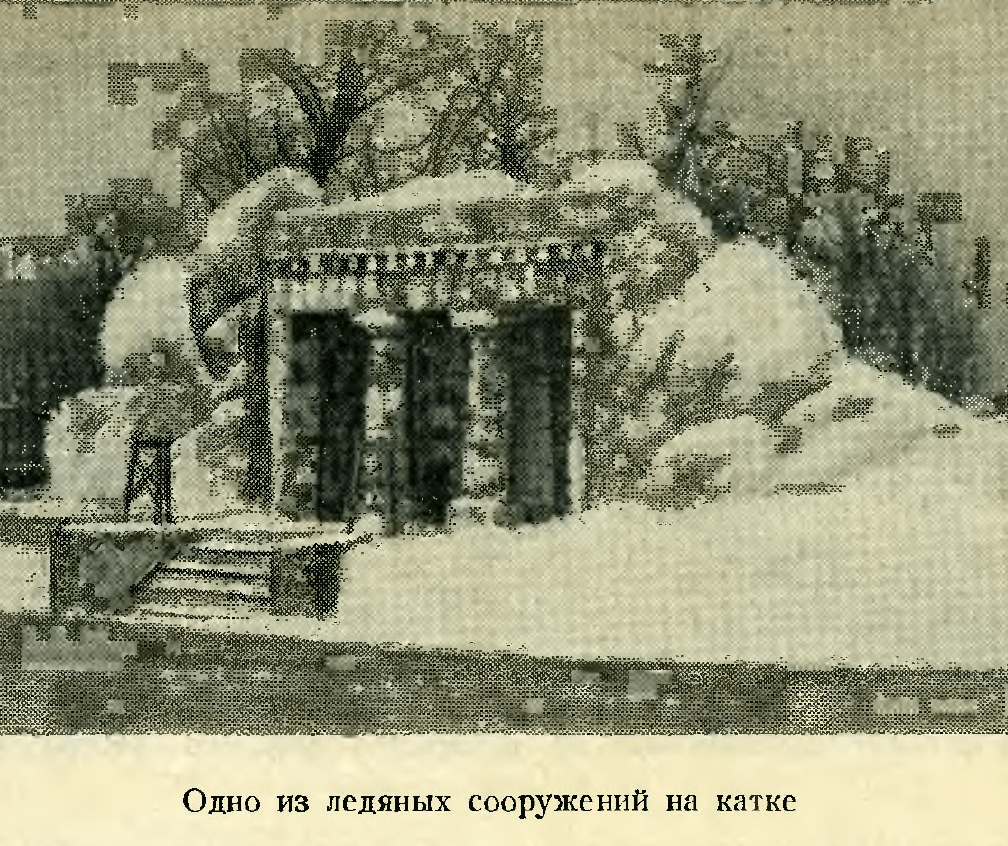
Because of its nature as a garden dedicated to the Russian elite, its architecture was proudly displayed on the three islands as symbols of Russian civilisation
Panin’s uniform
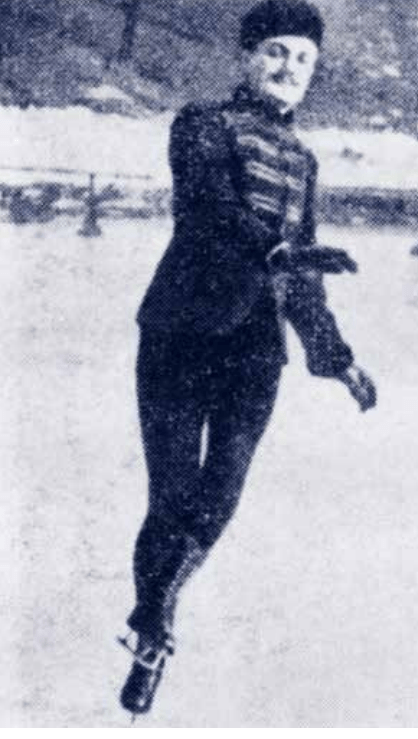
One final aspect of a distinctly Imperial Russian culture which seeped into Panin’s competition was his uniform. Panin requested a special uniform based on Cossack military dress. He drew on a traditional Russian past in a manner similar to the dress of modern figure skaters, forming a link between his national identity and sport. The ‘hardy Russian soldier’ archetype was viable.
Panin competing at the 1908 Olympics.
3. Was Panin a Revolutionary?
Writing during the Soviet period, Panin’s work is filled with attempts to place himself within a class struggle. Sports at this time indeed represented a space of increasing borgeoisification, where more people outside of the elite were gaining access to new spaces and sports.
Panin alleged that he came from modest beginnings, yet somehow gained entry into a bourgeoise club at 15 years old. The Yusupov gardens were techinically on an estate, but seem to have been open to the public often. Panin’s relationship to class is not totally clear.9
Panin raises the issue of reading sources during the pre-revolutionary period. The events of 1917 act as clouds which obscure and complicate the idea of a class struggle. What is important is that tensions between the elite club owners, borgeoise skaters, and excluded workers remain.
Nikolai Panin-Kolomenkin, Pages from the Past: Memories of an Athlete (Leningrad, USSR: Public Publishing House of Physical Education and Sport, 1951). ↩︎
Panin indeed skated left-footed: see The New York Herald (European Edition), “Fine Displays Given at Olympic Skating Tests,” October 30, 1908. International Herald Tribune Historical Archive, 1887-2013. ↩︎
Volker Kluge, “Nikolai Kolomenkin Did Not Consider ‘Panin’ to Be so Great,” Journal of Olympic History, no. 1 (2014): 20. ↩︎


 Russia and the 1908 Olympic Games
