1. Circus Culture
2. The Alexander Zass Case
3. Were the Wrestlers of Peasants or Bourgeoise?
How did Russia Win Two Medals in Wrestling?
Wrestlers Nikolai Orlov and Alexander Petrov both won medals in 1908. With four representatives and two medalists, Why were Russian wrestlers in particular successful?

Above: Alexander Petrov’s final bout with the Hungarian Richard Weisz
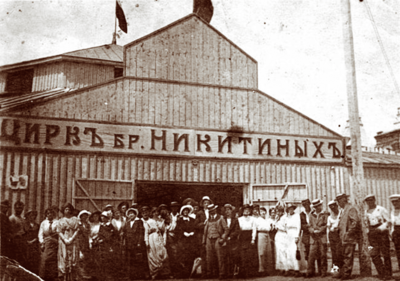
The 1880s and 1890s saw the rise of travelling circuses which spread wrestling to a wider audience. More in Russia than in any other country, strongmen and show wrestlers became idealized, a change which led many youth to discover strength sports and pursue professional careers
1. Developing Strength as a Spectacle
With 6500 circuses by the end of the 1860s and the 1894 decriminalization of wrestling as a sport, Russian circuses took on a defined form.1
Key characteristics of the Circus
- Circuses always included a set for wresters to perform honorable duels against one another 2
- To increase audience engagement, guests were allowed and encouraged to challenge strongmen and wrestlers
- Circuses travelled around the country, including to rural areas which would otherwise be without access to organized sport
2. The Case of Alexander Zass
Although very little is known about Orlov and Petrov, other Russian performers argue that their childhood experience with the circus were essential in creating passion for wrestling and lifting.
The Amazing Samson – Alexander Zass
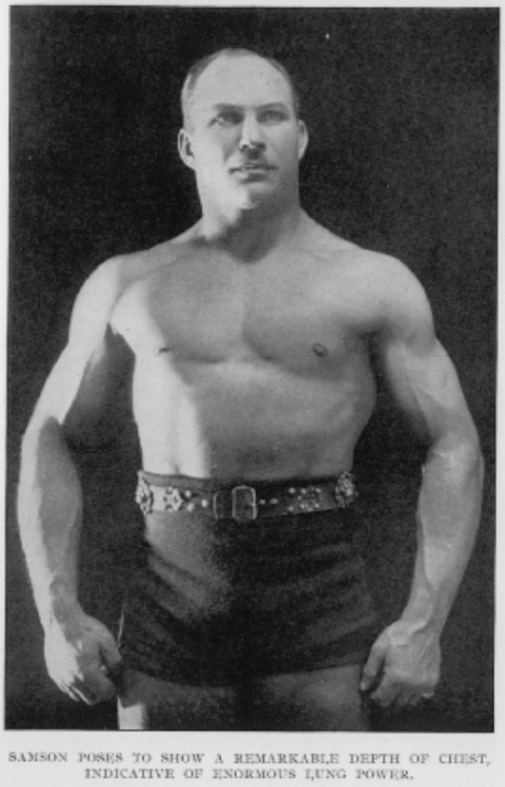
Born in 1888, Alexander Zass immigrated to Great Britain after growing up in Vilna, near the Northern Polish border
- Became known as the performer Amazing Samson in Great Britain
- Wrote his autobiography in English in 1926
Above: Zass as pictured in his autobiography
Samson makes several direct connections between his upbringing in Russia and his successes.
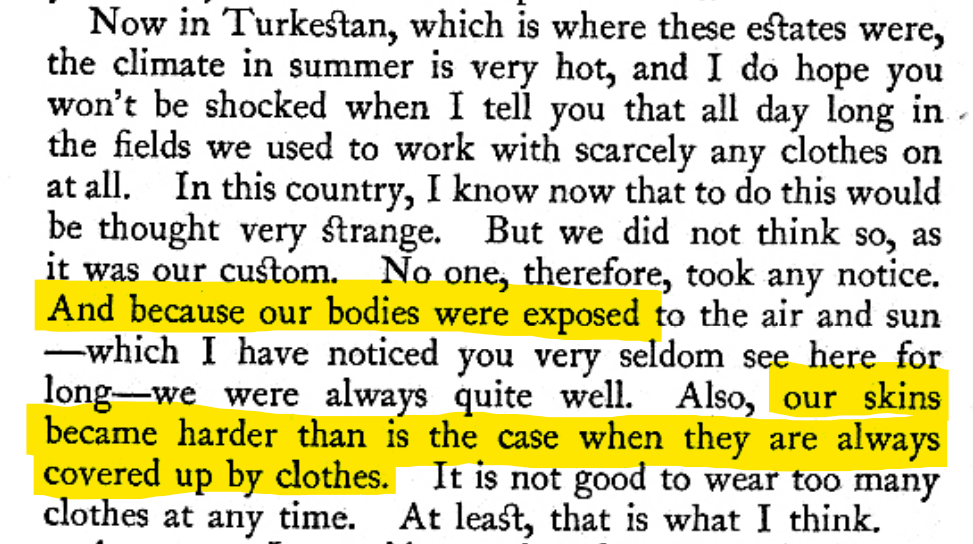
- Physical Toughness through Farm Work
For Zass, Russian farming was better for the body3
2. Inspiration through Circus4
Zass traces his development to the first time he witnessed a circus. His wording is telling:
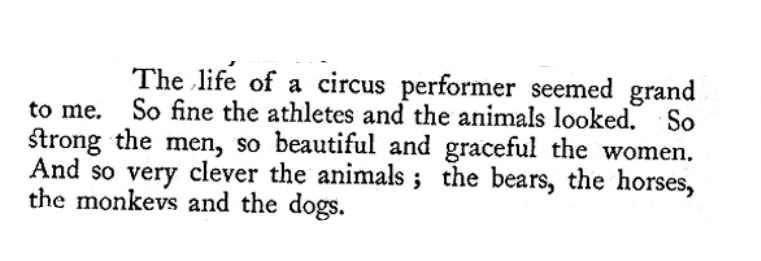
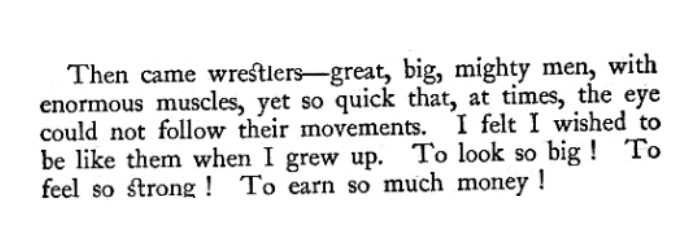
While not a wrestler, Zass’ experience shows that the circus indeed played a role in encouraging athletic development in the 1880s and 1890s. Wrestlers grew up in a time of increasing acceptance in the 1890s and 1900s.
3. Was Wrestling Urban or Rural?
Zass makes the case that the travelling circus enabled him to learn strength as a peasant in the countryside. Yet writing after 1918, Zass shares with Nikolai Panin the desire to frame his development as a class struggle against the bourgeoise institutions of the 1880s and 90s.5
There exists a tension between proletarianization (the spread of sport to rural areas through travelling circuses) and borgeoisification (the concentration of athletics in urban centers like St. Petersburg as a result of urbanization).
On the left: a travelling circus
On the Right: The St. Petersburg Athletic Society Lifting Group 6
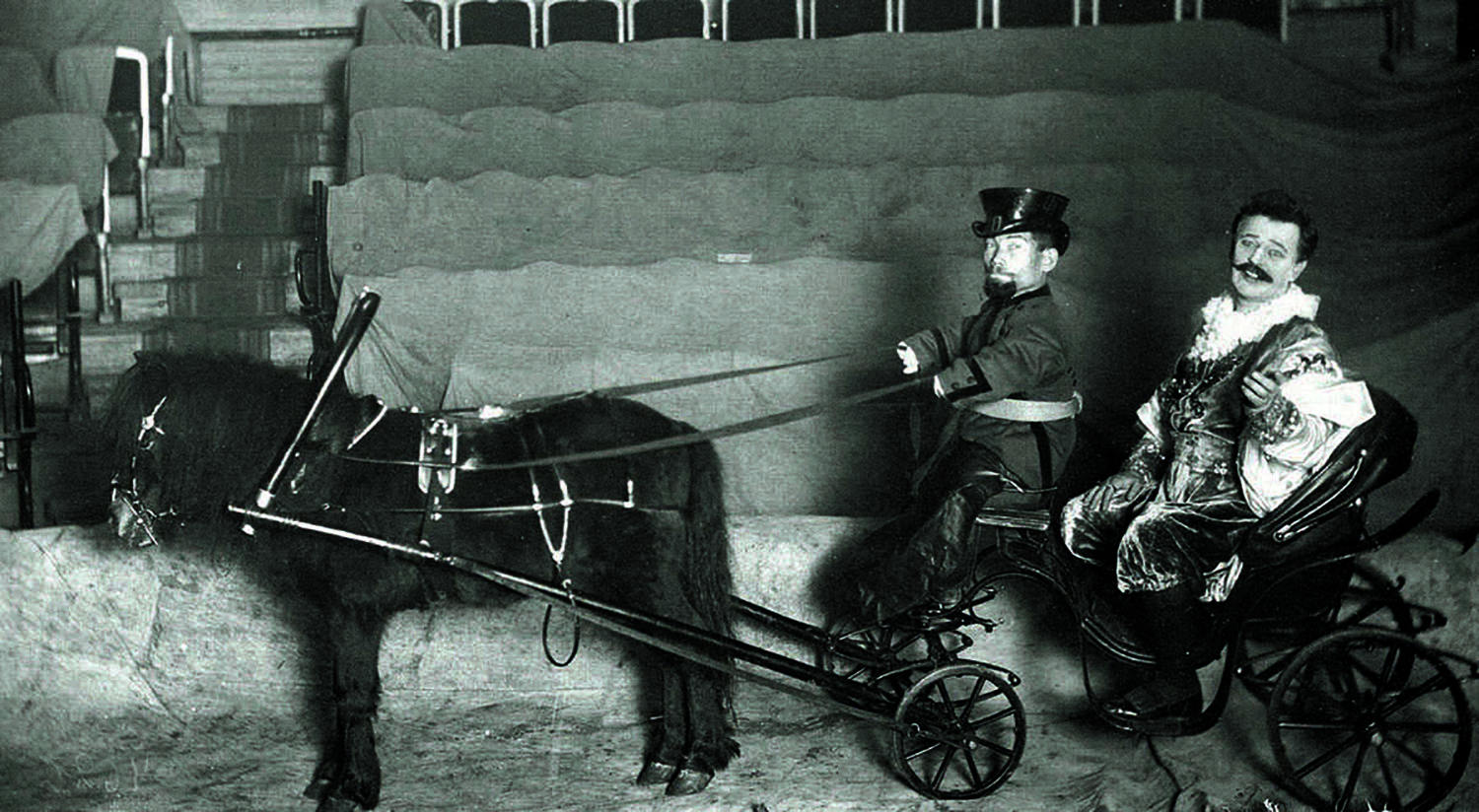
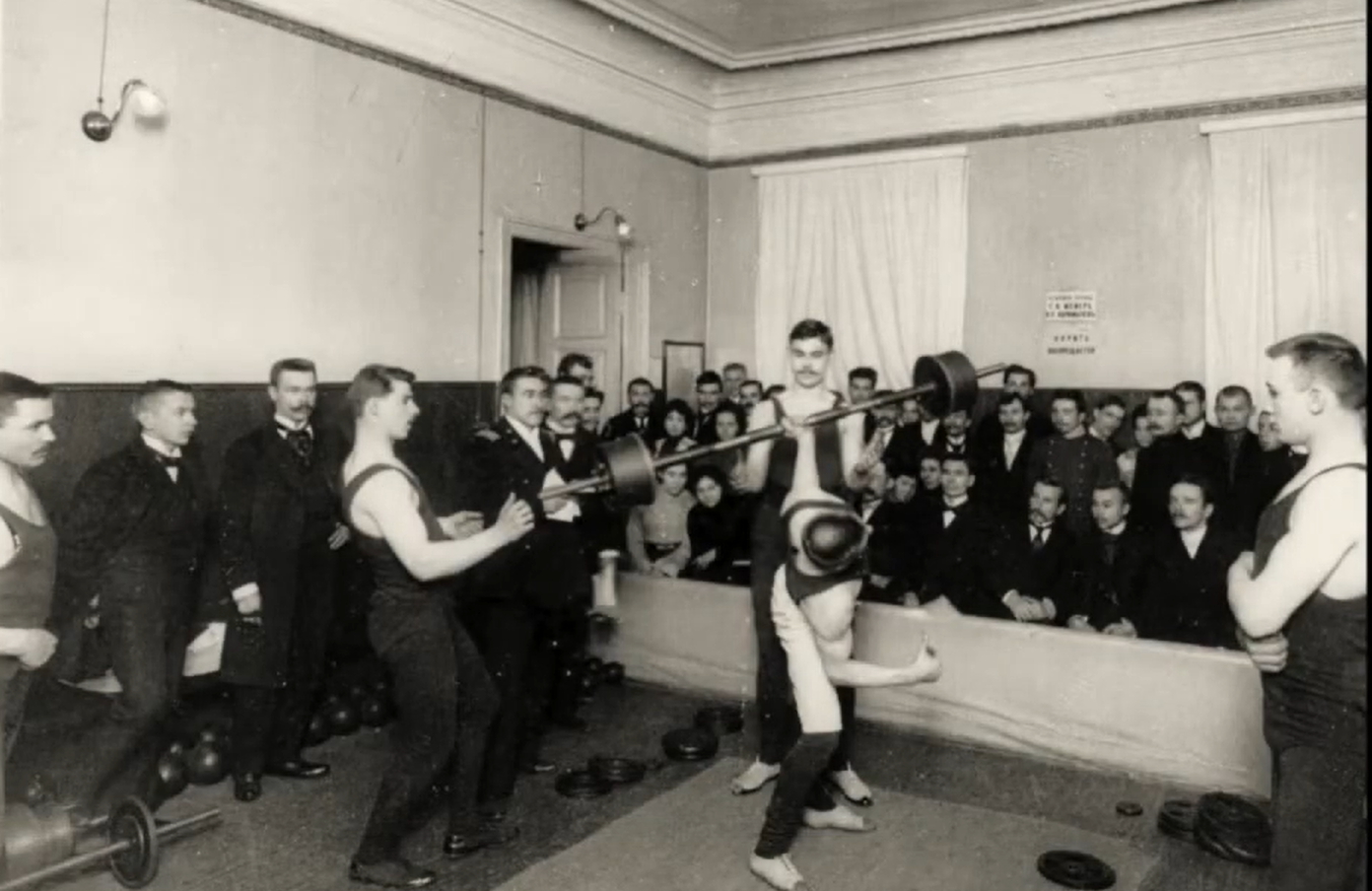
Russian sport was being pulled in both directions. While Zass exemplifies the rural success story, both Orlov and Petrov were members of the exact St. Petersburg Athletic society pictured above.
It is impossible to know what influenced Orlov and Petrov’s journey. They were, however, competing during a particular historical time which involved the spreading of new cultural institutions which may have played a role in their development, or at least in their legitimization as real athletes.
- James Riordan, “The Beginnings of an Organised Sports Movement, 1861-1917,” In Sport in
Soviet Society: Development of Sport and Physical Education in Russia and the USSR (Cambridge University Press, 1977). ↩︎ - Stepan M. Shamin, “Circus of Tsarevich Aleksei Mikhailovich.” Studia Slavica et Balcanica Petropolitana (Saint Petersburg) 20, no. 2 (2016): 136–51. ↩︎
- Alexander Zass, The Amazing Samson: As Told by Himself (The Samson Institute London, 1926), 82. ↩︎
- Ibid. 83-84. ↩︎
- John D. Windhausen, “Russia’s First Olympic Victor.” Journal of Sport History 3, no. 1 (1976): 35–44. See also Ekaterina Emeliantseva, “Russian Sport and the Challenges of Its Recent Historiography,” Journal of Sport History 38, no. 3 (2011): 362-363. ↩︎
- St. Petersburg Athletic Society Photo Compendium, https://www.youtube.com/watch?v=YLPT9-kDbqQ ↩︎
 Russia and the 1908 Olympic Games